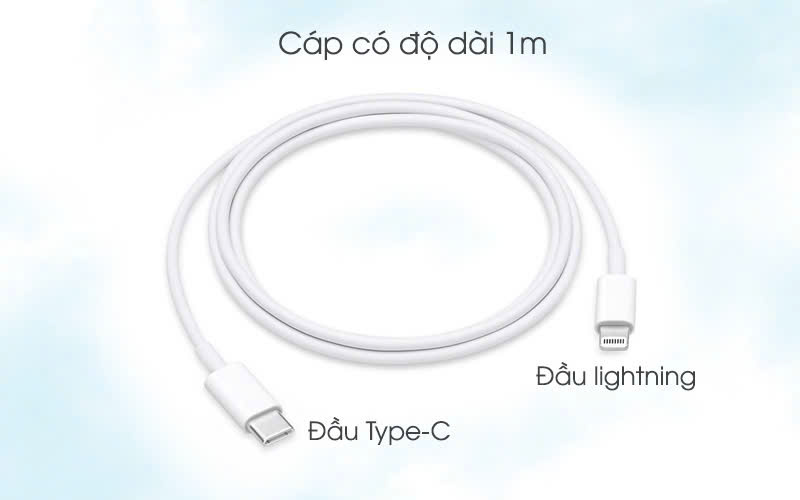
iPhone Charging Cable Manufacturing in Vietnam
iPhone Charging Cable Manufacturing in Vietnam
In the context of Vietnam's rise to become the "new factory" of the world, the electronics component manufacturing industry, especially...iPhone charging cable Vietnam is witnessing significant transformations. Beyond simply meeting domestic demand, factories in Vietnam are gradually establishing their position in the global supply chain.
1. The demand for iPhone charging cables in Vietnam has increased sharply.
With one of the highest rates of iPhone users in Vietnam in the region, the demand for replacement accessories, especially charging cables, has never cooled down. The switch from Lightning to USB-C on the latest iPhone models (from the iPhone 15 series onwards) has created a massive wave of peripheral device upgrades.
Today's consumers are not only looking for inexpensive products but are also particularly concerned about durability, safety, and compatibility. This is driving domestic businesses to improve their production capacity in order to gain market share.
2. Localization trends and the development of the components industry in Vietnam - MyMy Technology
Localizing the production process for iPhone charging cables not only helps reduce product costs but also shortens supply time.
- Supply chain shifts:Many of Apple's major partners have set up factories in industrial zones in Bac Ninh, Bac Giang, and Hai Phong.
- Improve quality:Vietnamese businesses have begun to master the technology of casting cable ends, wrapping them with durable braided material to prevent breakage, and controlling the processing chips inside.
The development of the mobile phone charging component industry has moved beyond simple assembly and into the design and optimization of charging capacity according to international standards.
3. What are the differences in manufacturing iPhone charging cables compared to Android cables?
This is a question that many manufacturers are concerned about. Unlike the open ecosystem of Android, producing cables for iPhones requires stricter standards:
- MFi (Made for iPhone/iPad) certification:This is the most important "passport." iPhone cables need an authentication chip to ensure they don't cause fires, explosions, or display "accessory not supported" errors.
- Material standards:Apple has strict environmental regulations, requiring that manufacturing materials (TPE plastic, metal) be highly recyclable and free of toxic chemicals.
- Finish quality:The contact pins on iPhone cables are typically gold- or silver-plated with extreme precision to ensure stable power and data transmission.
4. The role of manufacturing plants in the supply chain - MyMy Technology
Charging cable manufacturing plants play a strategic role. In Vietnam, these factories not only serve retail but also act as suppliers for major electronics retailers and export markets.
Owning modern production lines helps Vietnam reduce its dependence on imported goods from neighboring countries, while simultaneously increasing the added value for domestic supporting industries.
5. The Vietnamese charging cable market: Opportunities and challenges
|
|
|
|
|
|
|
|
|
|
|
|
|
|
|
|
6. Sustainable development orientation and expansion potential - MyMy Technology
The "Green Manufacturing" trend is spreading rapidly. iPhone charging cable manufacturers in Vietnam are moving towards:
- Use recycled materials:Develop cable sheaths from recycled plastic or bio-fibers.
- Minimize packaging:The packaging features a minimalist design, using soy-based ink and FSC-certified paper.
- Automation:Applying robots in quality control processes helps minimize human error and optimize resources.
Potential for expansion:With free trade agreements (FTAs), "Made in Vietnam" charging cables have a great opportunity to export to demanding markets such as the US, Europe, and Japan, where quality standards are paramount.
Conclude
MyMy Technology The production of iPhone charging cables in Vietnam is facing a "golden opportunity." By leveraging its advantages in labor, geographical location, and the shift in global supply chains, Vietnam has the potential to become a leading technology accessory manufacturing hub in the region.
Note for businesses:To succeed in this field, investing in quality control systems and obtaining international certifications is the only path to sustainable development.